
What's on
%20(1).png)
Open Coffee Cambridge
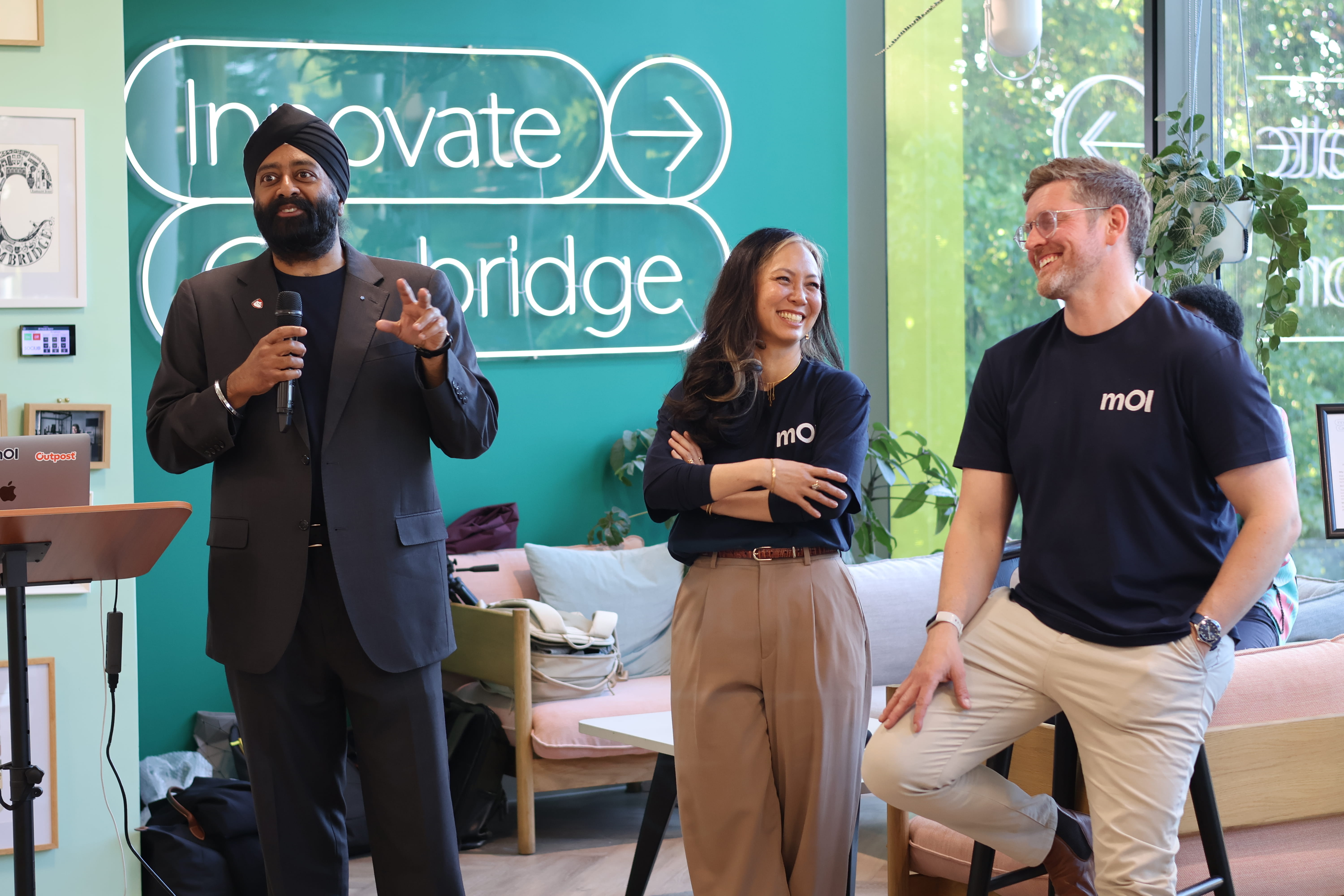
On 31 July, our co-founder and COO Daniel Rooke joined Jeremy Leong of CAMentrepreneurs for a fireside chat at Open Coffee Cambridge. The morning was run by CAMentrepreneurs and Innovate Cambridge, and more than 130 founders, researchers, investors and curious people signed up to join us over coffee.
.jpg)
Dan has built companies as a lawyer, an operator, an investor and now a founder again
Dan started his career as a senior lawyer before moving into industry. He then co-founded Start Codon, Cambridge’s early-stage life sciences fund and venture builder, with Jason Mellad, and mentors founders at Cambridge Judge Business School. With OtoImmune, he has stepped back into founder mode to build something for people living with immune conditions.
Dan shared three lessons from going from step 0 to step 1
- Starting again means being a beginner again. Advising founders from the investor side is very different from doing the work yourself with a small team and limited resources. Asking for help early is part of the job.
- Start with the people who have the problem. Before building anything, spend time with the people you want to help. For OtoImmune, that meant listening to people living with autoimmune conditions about what their care is really like.
- Hold the mission steady and let the evidence shape the route. Watch what people actually do as well as what they say, and be willing to change how you get there when the evidence points somewhere new.
The questions from the room were thoughtful and generous, and the conversation carried on well into the networking afterwards.
.jpg)
Open Coffee brings the Cambridge start-up community together
Open Coffee Cambridge is an informal networking morning for entrepreneurs, students and anyone in the start-up community, bringing together the CAMentrepreneurs network and members of Innovate Cambridge’s Glasshouse. CAMentrepreneurs is a University of Cambridge alumni group that supports business and social entrepreneurship, with more than 25 chapters around the world. Innovate Cambridge leads a shared innovation roadmap for the city, backed by more than 200 partner organisations.
Thank you to our hosts and to everyone who came
Thank you to Jeremy Leong for such a warm and honest conversation, to Tasneem Khatib and the CAMentrepreneurs Cambridge team, to Innovate Cambridge, and to everyone who got up early to join us. If you would like to follow what we are building for people with immune conditions, join mOI.
mOI launch
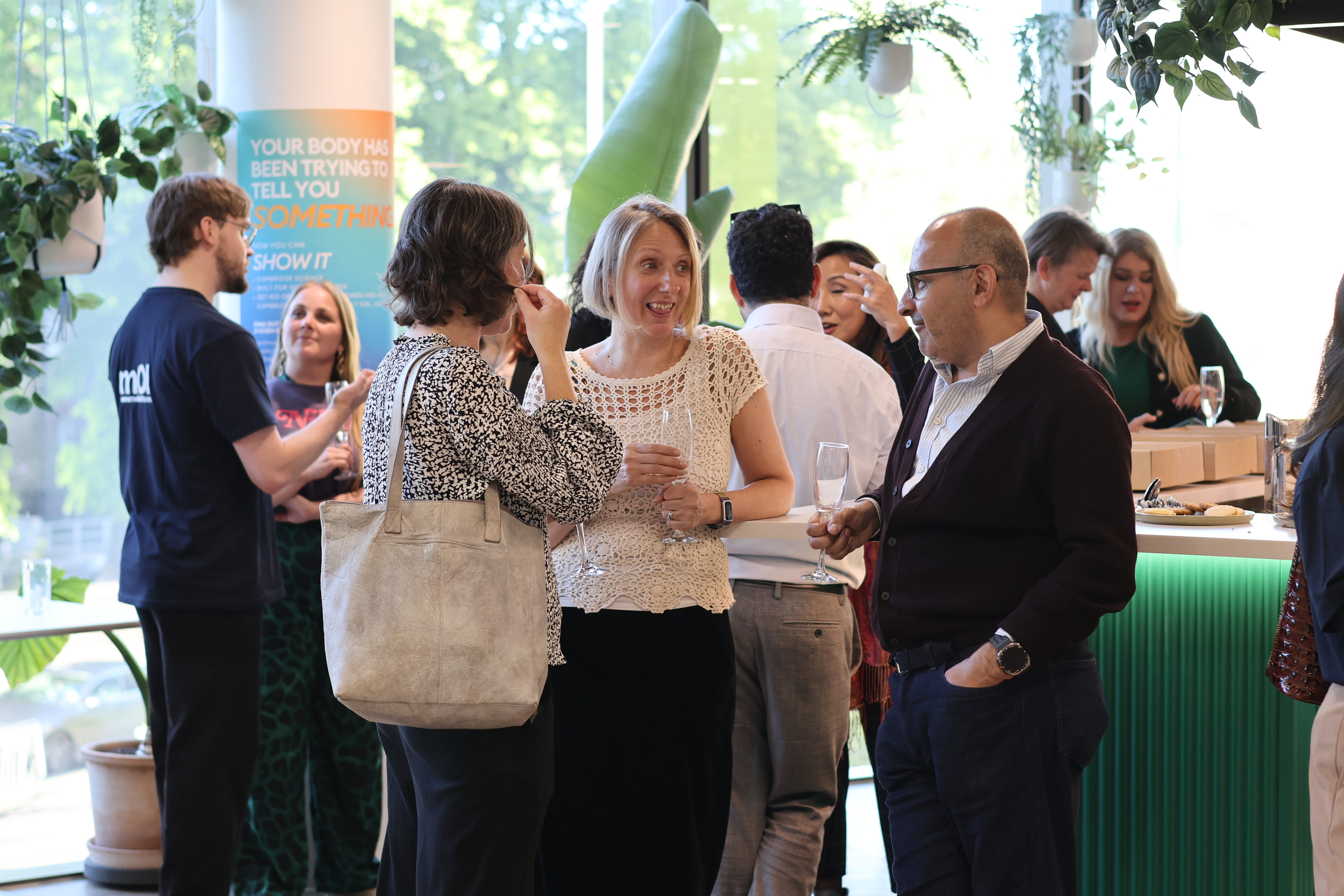
On 14 May 2026 we opened the doors on mOI Health with a launch party at the Glasshouse, run by Innovate Cambridge. The room was full of people living with immune conditions, clinicians, scientists, investors and the friends and family who have supported us from the start.
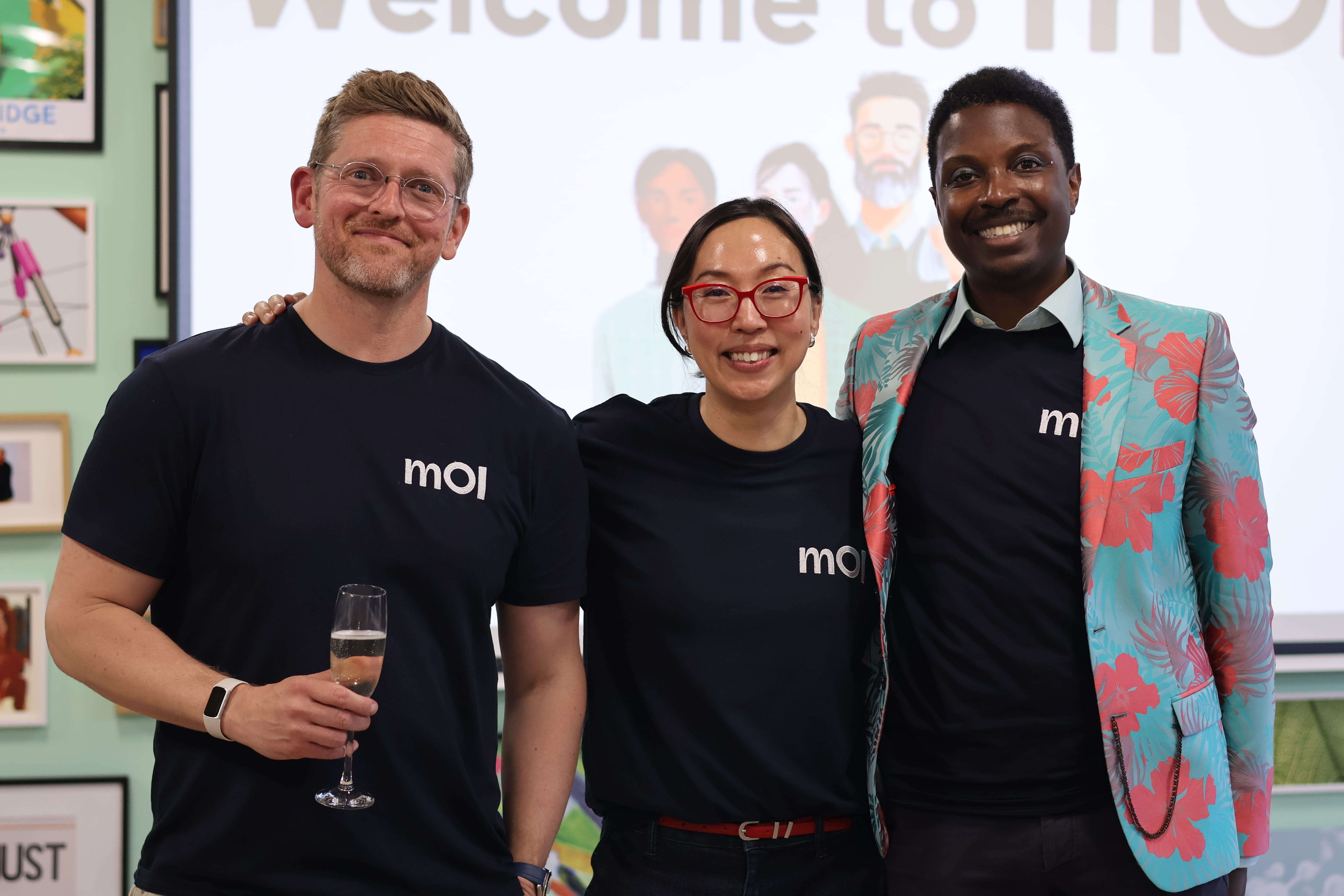
mOI brings your immune health information together in one place
mOI stands for My OtoImmune, and it is pronounced like the French word "moi". Òtò is the Yoruba word for "unique", because no two immune systems, or the journeys of the people living with them, are the same.
The mOI Health app helps people keep track of their symptoms, medications, appointments and test results in one place, so they can see patterns over time and walk into their next appointment with a clear record. Our tagline sums it up: Note it. Know it. Show it.
The whole team spoke about the part of mOI they are building
Every member of the team took a turn to speak. Our CEO and co-founder Jason Mellad opened with the reason we started OtoImmune: people with immune conditions often wait years for answers, and spend much of that time trying to be taken seriously. Our co-founder and COO Dan Rooke followed, talking about how mOI has been shaped by the people it is built for. The rest of the team then each shared the part of mOI they work on, from the science and clinical thinking behind it to the app itself and the community we are building. Along the way, guests saw how members can log symptoms and medications, connect their wearables and share a clear summary with the people who care for them.
The best part came afterwards, as people stayed on to talk. Several guests shared their own long road to a diagnosis, and hearing those stories in person reminded everyone in the room why we are building mOI.
Thank you to everyone who has joined us since launch
Thank you to Innovate Cambridge for hosting us at the Glasshouse and for everything they do to support founders in Cambridge. Thank you also to everyone who came to celebrate with us, and to everyone who has shared feedback since. Every conversation is helping us make mOI more useful for the people it is built for. If you would like to be part of it, join mOI.
Hope Journey talk and walk
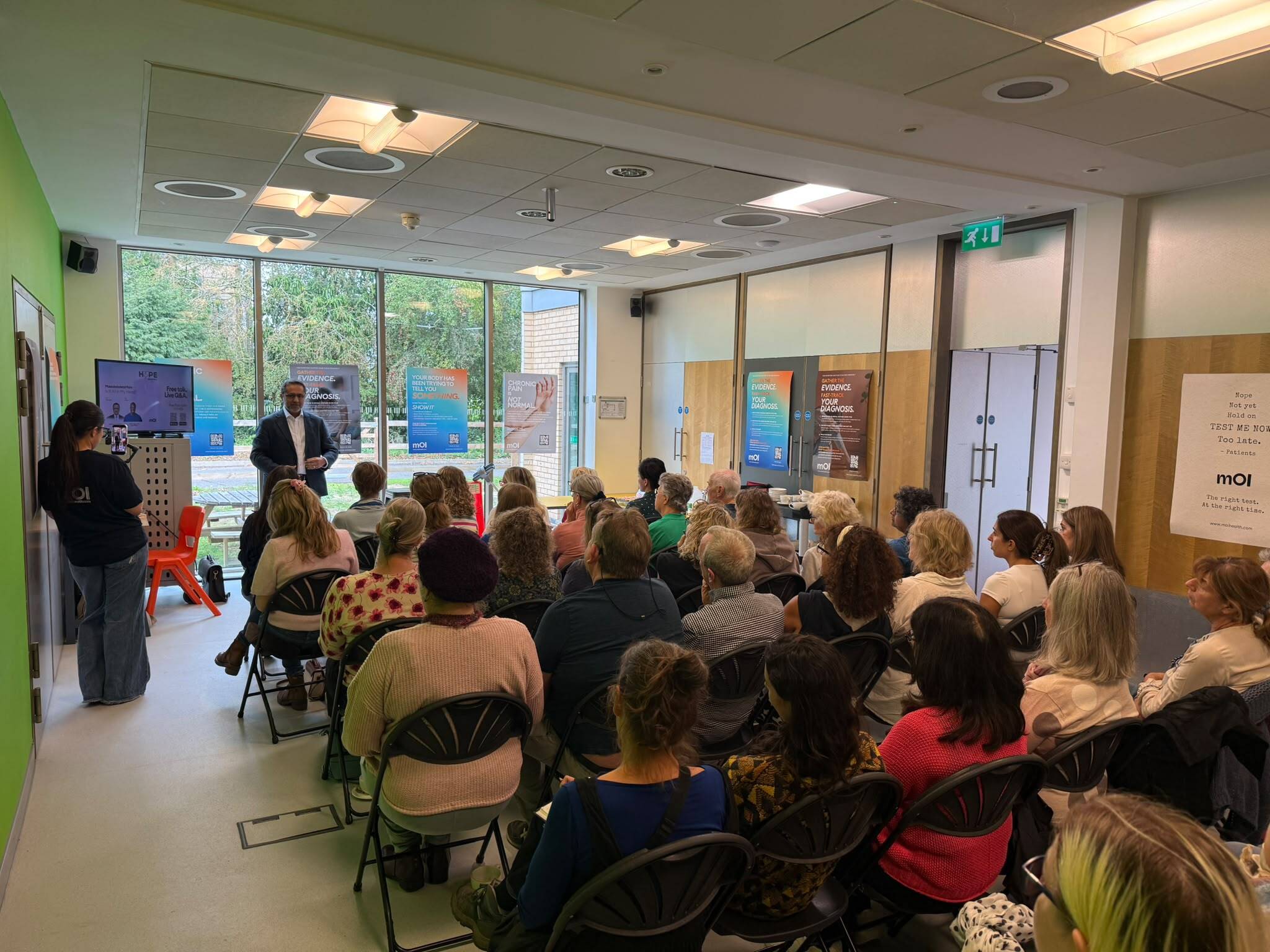
On a bright Saturday morning, people living with joint, back and muscle pain came together at the Cambridge Science Centre for a free talk, tea and cake, and a walk in good company. The room filled up quickly, and it was lovely to see people who had come on their own find someone to chat to before the talk began. We held the morning as part of the Autoimmune Association’s Hope Journey Walk, which took place on the same day in Washington, D.C. and in local communities around the world.
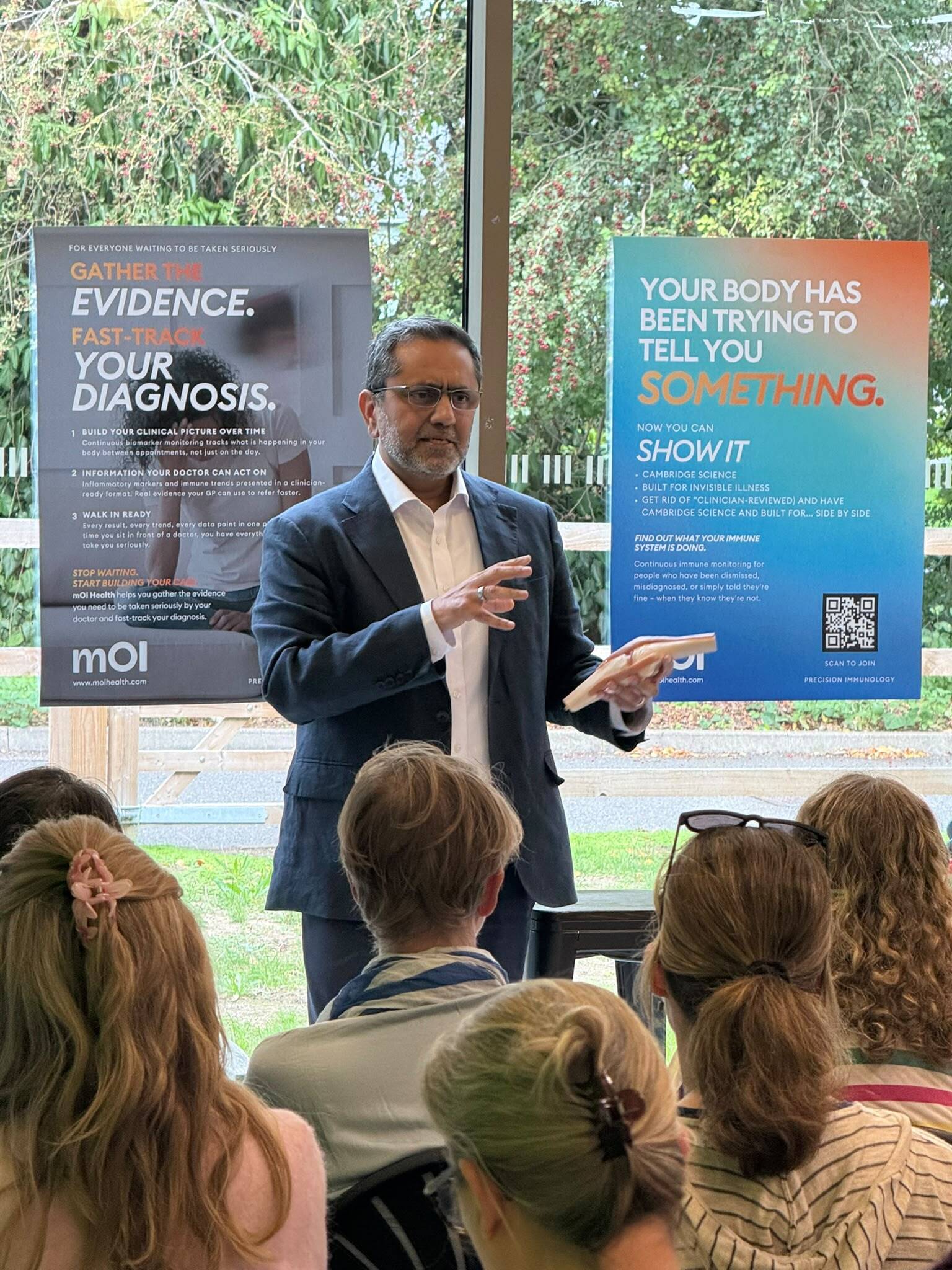
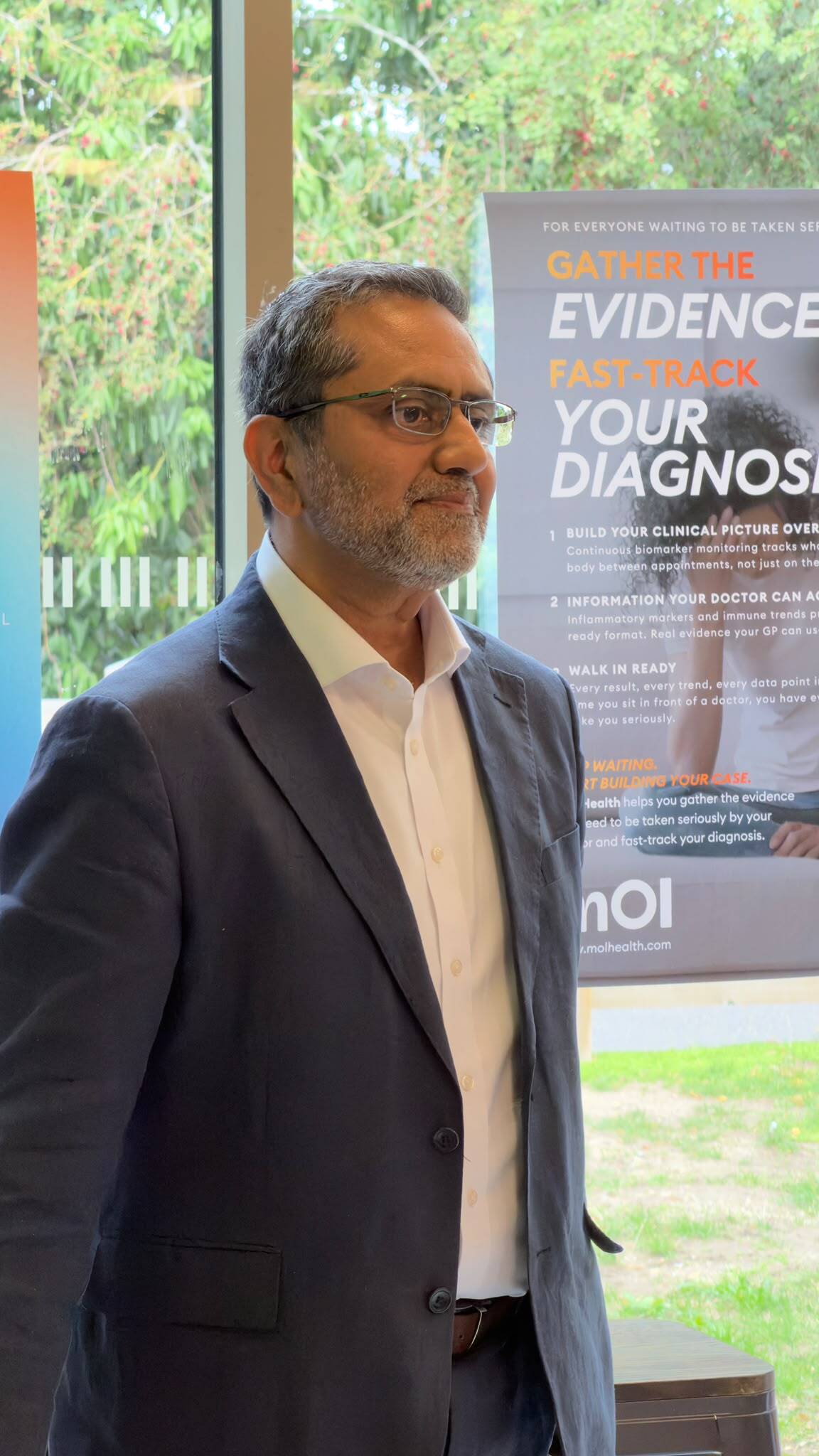
Dr Anshuman Malaviya explained why persistent pain deserves a proper look
Our guest was Dr Anshuman Malaviya, Consultant Rheumatologist at Addenbrooke’s Hospital. His talk, "Musculoskeletal pain: is it all in my head?", took on a question many people in the room had been asked more than once. Three points stayed with us:
- Some signs point towards inflammation. Joint stiffness that lasts more than half an hour in the morning, swelling, and pain that eases as you get moving are all worth raising with your GP.
- A normal blood test does not always settle the question. Inflammatory conditions can take time to show up, so the pattern of symptoms over months often tells a doctor more than a single appointment or test result. Keeping a simple record really helps.
- All pain is real. The nervous system shapes how everyone feels pain, and pain without inflammation behind it still deserves care. There are treatments that help, whatever the cause.
The questions went on well past the scheduled time, and we are very grateful to Dr Malaviya for answering so many of them with such patience and care. Dr Malaviya gave his time voluntarily: he was not paid for the talk and has no financial relationship with mOI or OtoImmune.
The walk set off at 11:30 and everyone went at their own pace
After the talk, the group headed out on a walk around the Cambridge Science Park. Some people walked the whole way, some did part of it, and some stayed behind to keep talking.
The Autoimmune Association runs the Hope Journey Walk to raise awareness and funds
The Autoimmune Association is a nonprofit dedicated to autoimmune disease advocacy, awareness, education and research. Its first Hope Journey Walk, in October 2025, brought together 227 walkers and raised $95,000. This year’s walk was the second, and its "Walk Anywhere" option let people join from their own neighbourhoods and local parks. The money raised goes towards research, advocacy and patient support.
There are over 100 known autoimmune diseases, and the Association’s figures show that it takes an average of 4.5 years and visits to four different doctors to get an accurate diagnosis. Find out more, or donate, at autoimmune.org.
Thank you to everyone who came
Thank you to Dr Malaviya, to the Cambridge Science Centre for hosting us and making us feel so welcome, to the Autoimmune Association, and to everyone who gave up their Saturday morning to be there. Many of you told us how good it was to be in a room full of people who understood. We felt the same. We’ll be holding more talks and walks soon. If you would like a simple way to keep track of your symptoms and bring a clear record to your next appointment, join mOI.