

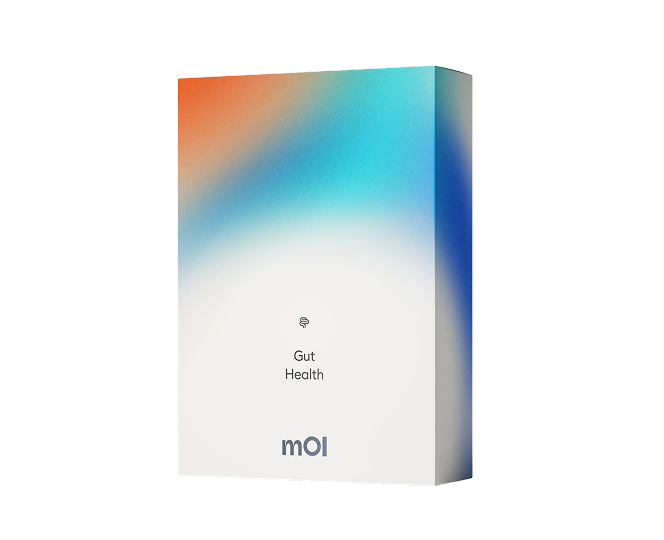

Gut Health
- Faecal calprotectin: a protein that rises when your gut lining is inflamed. Normal levels can help rule inflammation out. Used in the investigation of inflammatory bowel disease (IBD).
- Secretory IgA (sIgA): the main antibody protecting your gut lining, showing how well your gut’s immune defences are working.
- qFIT: checks for tiny traces of blood in your stool that you can’t see, using the same method as NHS bowel cancer screening.
- Sample: Stool collected at home
- Results: within 10 working days of lab receipt
- Self-sampling: Collect sample at home using the supplied kit
- Sample: Stool collected at home
- Results: within 10 working days of lab receipt
- Self-sampling: Collect sample at home using the supplied kit
What we measure & why it matters
Three markers from a single stool sample:
- Faecal calprotectin: a protein released when the gut lining is inflamed. Higher levels can suggest inflammation, and normal levels can help rule it out as the cause of your symptoms.
- Secretory IgA (sIgA): the main antibody protecting your gut lining. It shows how well your gut’s immune defences are working.
- qFIT: checks for tiny traces of blood in your stool that you can’t see.
This test may be right for you if you’ve been living with bloating, constipation, pain or discomfort after eating, especially if you’ve been told it might be IBS but want to understand more. It’s also useful if you’re managing a condition that affects your gut, taking medication that can affect it, or simply want a baseline to track your gut health over time.
You collect your sample at home, with no appointment needed, and your results arrive in the mOI app, ready to share with your GP.
If you notice blood in your stool, a change in your bowel habit lasting more than three weeks, unexplained weight loss or severe abdominal pain, please see your GP now rather than waiting for a test.
Gut Health measures three stool markers that can show whether something may be going on in your gut. Gut Health+ includes the same three markers and adds IBD SIGNAL, a UKCA-marked metagenomic test developed by our partner Salient Bio, which supports the assessment of inflammatory bowel disease (IBD), including Crohn’s disease and ulcerative colitis. Both use the same single stool sample.
No. qFIT uses the same method as the NHS bowel cancer screening programme to look for tiny traces of blood, but a positive result doesn’t tell you why blood is there. It can have many causes, including haemorrhoids and inflammation. Any positive result should be discussed with your GP. This test isn’t a replacement for NHS bowel cancer screening, so if you’re invited for screening, please still take part.
These markers can show signs that something may be going on, but they can’t tell you what’s causing your symptoms on their own. A normal result doesn’t rule out every gut condition, and an abnormal result may need further investigation. If your symptoms continue, even with normal results, it’s worth going back to your GP.
Gut Health+ adds IBD SIGNAL from the same sample, which supports the assessment of inflammatory bowel disease. Gut Autoimmunity is a blood test that looks for antibodies linked to coeliac disease and inflammatory bowel disease, and Immune Core checks 50+ markers across your wider health, including iron, vitamin B12 and folate, which gut conditions can affect.
A structured path to Immune Intelligence
Choose your test
Select the test that’s right for you
Start with what you want to explore or understand
Receive your kit
Your test kit is delivered to your door
Everything you need, ready for your sample
Provide your sample
Follow the instructions in your kit or book an at home visit for blood collection.
Simple, guided steps depending on your test
Send your sample to the lab
Your sample is securely prepared and
sent for analysis
Handled with care to maintain quality
View your results and insights
See your results in the app, connected to your health over time
Helping you make sense of what’s changing
Frequently asked questions
Most gut health tests tell you one thing. This one looks at three.
Bloating, constipation, pain or feeling off after eating can have many causes. Gut Health looks at three useful markers from a single stool sample you collect at home: inflammation, your gut’s immune defences and hidden blood. Faecal calprotectin is the same marker NHS gastroenterology uses to help decide whether further investigation is needed, and qFIT uses the same method as the NHS bowel cancer screening programme.
Your results arrive in the mOI app alongside the symptoms and data you track, ready to share with your GP. If you want to know whether inflammatory bowel disease could be part of the picture, Gut Health+ adds IBD SIGNAL, which supports the assessment of IBD.
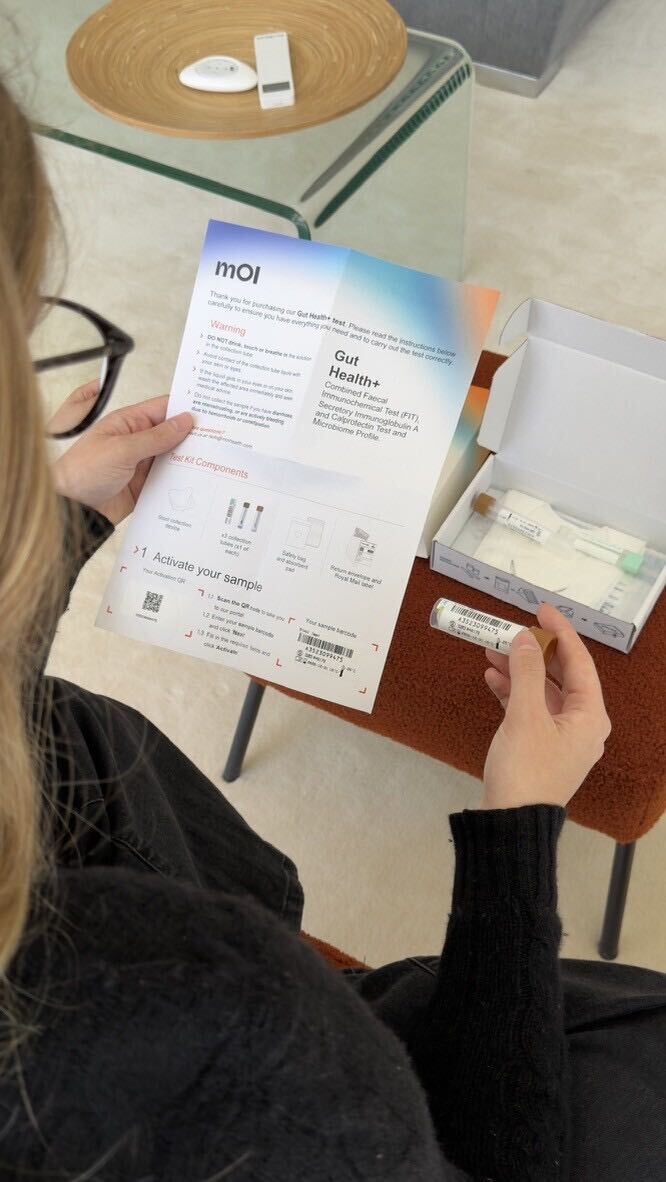
Your stool collection kit is posted to you in secure packaging. It contains:
- sample collection tubes
- a collection device to help you take your sample
- an information leaflet with step-by-step instructions
- a specimen bag
- prepaid return packaging
You don’t need a phlebotomist or an appointment. You collect your sample at home, following the instructions in the kit. Your sample needs to be posted back on the same day you collect it, so try to collect it on a day when you can get it in the post straight away. Once you’ve collected it, seal it in the tubes provided and send it back in the prepaid return packaging. Results will be available after your sample has been received and processed by the lab.
Gut inflammation
Faecal calprotectin When the gut lining is inflamed, white blood cells flood the area and release a protein called calprotectin. The more inflammation there is, the more of it shows up in your stool. High levels can suggest something inflammatory is going on. Normal levels can help rule out inflammation as the cause of your symptoms, which matters if you’ve been told it might be IBS. It’s the same marker NHS gastroenterology uses to help decide whether further investigation is needed.
Mucosal immune function
Secretory IgA (sIgA) Your gut is one of your body’s most important immune barriers, and secretory IgA is the antibody that holds that barrier together. It patrols the gut lining, neutralises threats, and stops harmful substances from crossing into the bloodstream. Measuring it in stool tells you how well that defence system is working. Low levels may mean the gut’s immune defences are depleted. Higher levels may mean the immune system is responding to something, whether that’s a pathogen, a food trigger, or ongoing inflammation.
Occult blood detection
qFIT (quantitative faecal immunochemical test) Sometimes there’s blood in the stool that you’d never know about because you can’t see it. qFIT is designed to find it. It uses the same method as the NHS bowel cancer screening programme to detect tiny traces of human blood. A positive result doesn’t tell you why it’s there, but it gives you and your clinical team something real to investigate. For anyone taking anti-inflammatory medication long-term, or managing a condition that affects the gut, that’s an important thing to know.
- Try to collect your sample in the morning if you can. It makes it easier to get it in the post the same day.
- Avoid collecting your sample during your period, as this can affect results.
- If you’ve had a colonoscopy or bowel prep in the last 2 weeks, wait before collecting.
- Let your GP or clinical team know about any medications you’re taking, particularly NSAIDs or iron supplements, as these may affect your results.
- Seal your sample securely in the collection tubes provided, following the instructions in your kit.
- Place it in the prepaid return packaging and post it back on the same day you collect it.
- If you feel unwell or have any concerns after collection, contact your GP or local NHS service for advice.
- For general guidance on stool sample collection, you can visit the NHS website: https://www.nhs.uk/conditions/stool-tests/
mOI Gut Health measures three stool markers: faecal calprotectin, secretory IgA, and qFIT. Each marker provides information about a specific aspect of gut function, but results should be read as part of a broader picture. A single result at a single point in time has limits, and what’s considered within range can vary depending on individual factors including age, medication use, and underlying health conditions.
This test doesn’t provide a diagnosis. Your results are intended to support your understanding of your gut health and may help inform conversations with your clinical team. They shouldn’t be used as the sole basis for any medical decision.
If you notice blood in your stool, a change in your bowel habit lasting more than three weeks, unexplained weight loss or severe abdominal pain, please see your GP now rather than waiting for a test. This test doesn’t replace NHS bowel cancer screening, so if you’re invited for screening, please still take part.
mOI is a UKCA marked Class I medical device, self-certified under UK MDR 2002. This test isn’t a substitute for clinical assessment or advice from a qualified healthcare professional.
We aim to get your results to you within 10 working days of your sample reaching the lab, though this can occasionally take longer for reasons outside our control. Turnaround times are estimates, not guarantees, and are subject to our Terms and Conditions of Sale. Most results appear directly in the mOI app, linked to your health record, alongside your tracking data and insights. For some tests, including certain gut health results, you may receive a PDF report instead. Where this applies, we’ll tell you at the time. If you’ve closed your mOI account by the time your results are ready, we’ll send them to the email address you gave us.
Your results will show which markers fall outside the normal range. That isn’t a diagnosis, but it’s worth discussing with your GP, who can decide whether you need further tests or a referral to a specialist such as a gastroenterologist. If your qFIT result is positive, please speak to your GP promptly. Your results are in the mOI app, ready to share. If your symptoms continue, even with normal results, it’s still worth going back to your GP.
No. The price of Gut Health includes your collection kit and prepaid return postage, and all prices include VAT. There’s no phlebotomy visit to pay for, because you collect your sample at home.
You’ll need a free mOI account to buy a test, but you don’t need a referral from your GP. Tests are priced separately, and all prices include VAT. Your account gives you access to your results, longitudinal tracking, and insights that connect your data over time. If you’re not a member yet, you can create a free account to get started.
Your health data is handled securely and protected under UK data protection law. You can read more about how we use and protect your data in our Privacy Notice.