

.png)
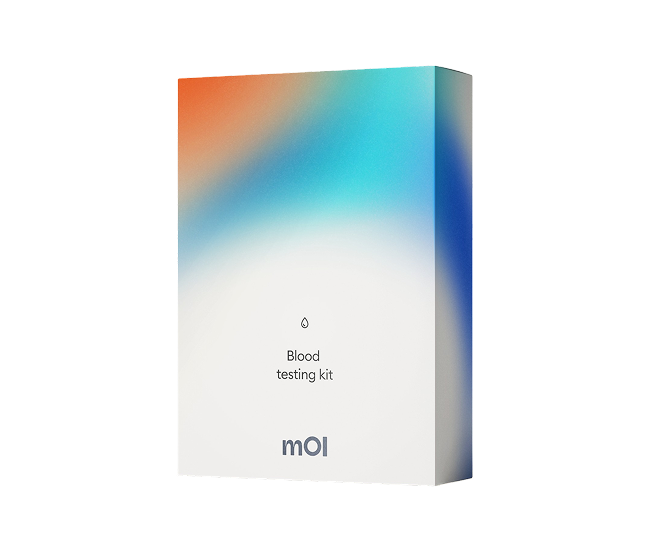
- 50+ biomarkers across 10 health systems
- Includes inflammation and metabolic health markers
- Looks at hormones, thyroid, iron and key nutrients
- Sample: Venous blood
- Results: within 10 working days of lab receipt
- Blood collection: Requires a venous blood draw at your home or work.
- Phlebotomy: needs to be purchased separately
- Sample: Venous blood
- Results: within 10 working days of lab receipt
- Blood collection: Requires a venous blood draw at your home or work.
- Phlebotomy: needs to be purchased separately
What we measure & why it matters
The panel covers metabolic and blood sugar health, sex hormones, iron status, liver and kidney function, cholesterol and blood fats, thyroid function, vitamins and minerals, and inflammation markers. Add the confirmed full biomarker list here, grouped by health system.
Symptoms and changes in health can involve more than one system. Reviewing several markers together gives broader context than considering one result in isolation.
Immune Core provides a broad baseline. Targeted autoimmunity panels investigate particular antibody patterns; Whole Genome+ adds inherited genetic context. Each answers a different question.
Results can highlight findings to discuss with your clinician. They do not establish the cause of a symptom or diagnose an autoimmune condition on their own.
A structured path to Immune Intelligence
Choose your test
Select the test that’s right for you
Start with what you want to explore or understand
Receive your kit
Your test kit is delivered to your door
Everything you need, ready for your sample
Provide your sample
Follow the instructions in your kit or book an at home visit for blood collection.
Simple, guided steps depending on your test
Send your sample to the lab
Your sample is securely prepared and
sent for analysis
Handled with care to maintain quality
View your results and insights
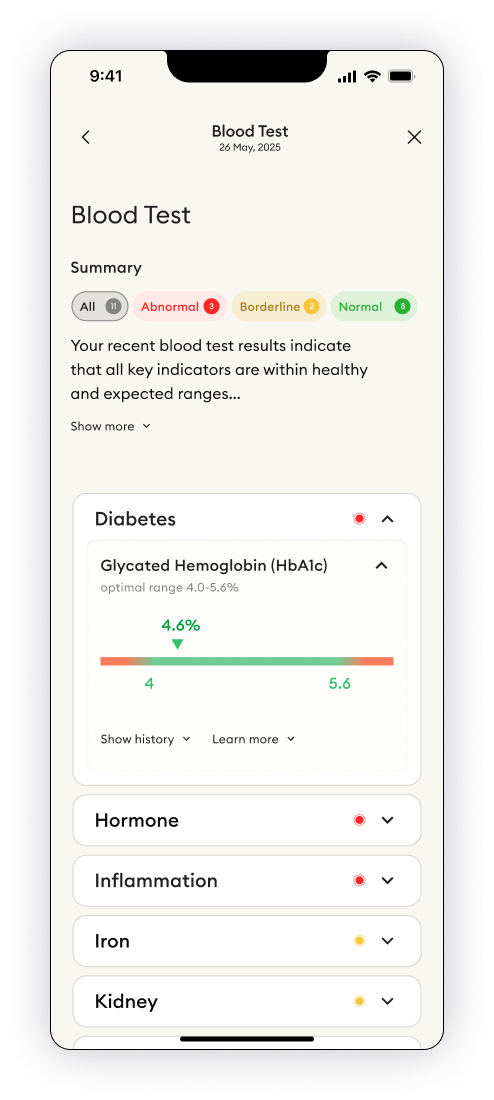
See your results in the app, connected to your health over time
Helping you make sense of what’s changing
Choose your test
Select the test that’s right for you
Start with what you want to explore or understand
Receive your kit
Your test kit is delivered to your door
Everything you need, ready for your sample
Provide your sample
Follow the instructions in your kit or book an at home visit for blood collection.
Simple, guided steps depending on your test
Send your sample to the lab
Your sample is securely prepared and
sent for analysis
Handled with care to maintain quality
View your results and insights
See your results in the app, connected to your health over time
Helping you make sense of what’s changing
Frequently asked questions
Immune Core tells you where your biology stands right now. Not a hunch, not a single marker. A complete picture across the systems most likely to shift when your immune health is under pressure, interpreted together so nothing gets missed and nothing gets taken out of context.
50+ biomarkers across ten health systems, from a single venous draw: metabolic and glycaemic health, sex hormones, iron, muscle and renal function, lipids, liver function, thyroid, vitamins and minerals, inflammatory markers, and cardiovascular health.
Metabolic and glycaemic markers tell you how well your body is managing blood sugar and the low-grade inflammation it can drive. Sex hormones and thyroid markers tell you whether the hormonal systems most closely linked to immune regulation are functioning as they should. Iron studies tell you whether your body has what it needs to produce and maintain healthy immune cells. Liver and kidney markers tell you whether the organs responsible for filtering and processing are under pressure. Lipids tell you whether inflammation may be affecting your cardiovascular risk. Vitamins and minerals tell you whether deficiencies that commonly undermine immune function are present. And inflammatory markers sit across all of it, telling you whether your immune system is quietly activated even when nothing obvious has triggered it.
This is the most comprehensive blood test mOI offers. The baseline everything else builds on. Every autoimmunity panel, every gut health result, every genomic finding gets sharper when it’s read alongside what Immune Core already knows about you. Autoimmune conditions rarely stay in one system. Your testing shouldn’t either.
Once your kit arrives, you’ll book a visit with a trained phlebotomist at your home or a location convenient to you. Appointments are available between 8am and 2pm, Monday to Wednesday. Your sample is collected using professional methods, centrifuged on-site to preserve quality, and prepared for secure delivery to the lab. Everything is handled for you from start to finish.
Metabolic health
HbA1c: HbA1c reflects your average blood sugar level over the past three months, not just today. Persistently high blood sugar drives low-grade inflammation throughout the body, and chronic inflammation is one of the most consistent features of autoimmune and immune-mediated conditions. Most people think of this as a diabetes marker. In the context of immune health, it is a measure of how well your body is managing one of the most significant and most overlooked drivers of immune disruption.
Hormones
Follicle-Stimulating Hormone (FSH): FSH is best known as a fertility marker, but its role goes further. The significant rise in autoimmune conditions in women during midlife closely follows the hormonal shifts of perimenopause, including rising FSH levels. Reproductive ageing and immune ageing are not separate processes. They happen together.
Luteinising Hormone (LH): Luteinising hormone is best known for regulating the menstrual cycle, but it also directly influences immune cell behaviour. The immune cells involved in inflammatory and autoimmune responses carry receptors for LH, meaning this hormone is part of the system that shapes how your immune system responds. Not just a reproductive marker.
Oestradiol: Oestrogen is one of the most powerful immune-modulating hormones in the body. It directly influences the immune cells responsible for identifying and responding to threats. This helps explain why autoimmune conditions are significantly more common in women, and why many women notice their symptoms shift around their period, pregnancy, and menopause. Hormonal changes and immune changes are often the same change.
Progesterone: Progesterone has a calming effect on the immune system. When levels drop, that calming effect goes with it. Many women notice flares in skin conditions, joint pain, and fatigue at the point in their cycle when progesterone is at its lowest. That pattern is not a coincidence. It is the immune system responding to a hormonal shift.
Prolactin: Most people associate prolactin with breastfeeding. But prolactin is also an immune-active hormone that stimulates the production and activity of immune cells. Research suggests elevated levels may be found more frequently in people with lupus and rheumatoid arthritis, in some cases appearing ahead of other clinical findings. One of the most immunologically significant markers in this panel, and one of the most commonly left off standard tests.
Testosterone: Testosterone has a dampening effect on inflammation. Low levels, in both men and women, are associated with higher inflammatory activity and a greater risk of autoimmune conditions. The fact that lupus is far more common in women and ankylosing spondylitis is far more common in men reflects in part the immunological influence of sex hormones. Testosterone belongs in an immune health panel. It is rarely included in one.
Sex Hormone-Binding Globulin (SHBG): SHBG is the protein that binds to sex hormones and controls how much of them is available for your body to use. Total hormone levels can look normal while the usable amount tells a very different story. Without measuring SHBG, it is impossible to know whether your hormone levels are truly adequate or just adequate on paper. Standard testing rarely includes it. It should.
Iron studies
Iron Iron is essential for building and maintaining a healthy immune system, not just for energy. Low levels make it harder for your body to produce the immune cells it needs to function properly. In autoimmune conditions, inflammation itself disrupts iron metabolism, which means low iron can be both a symptom and a driver of poor immune health. Worth tracking for both reasons.
Transferrin Transferrin is the protein that carries iron through your bloodstream. It also plays a protective role, binding to free iron and limiting how much is available to the bacteria and inflammatory cells that need it to grow. Think of it as iron traffic control. Measuring it alongside your circulating iron levels gives a clearer picture of what your body is doing with the iron it has.
Ferritin Ferritin is your body’s iron reserve. Low ferritin can cause significant symptoms, including fatigue, brain fog, and poor immune function, even when other iron markers look normal. But ferritin also rises during inflammation, which can make levels appear healthy when iron stores are depleted. It is one of the most useful and most easily misread markers in this panel. It needs the full iron picture to be interpreted accurately.
Total Iron-Binding Capacity (TIBC) TIBC measures how much spare capacity your blood has to carry iron. When iron is low, that capacity rises as your body tries to absorb more. When inflammation is present, it typically falls, even if iron stores look adequate. That distinction matters because it helps separate iron deficiency from inflammation as the underlying cause. Without it, the other iron markers are harder to make sense of.
Muscle and kidney function
Creatine Kinase (CK) When muscle tissue is damaged or inflamed, creatine kinase leaks into the bloodstream. Elevated levels after exercise are normal. Persistently elevated levels can be an early sign of autoimmune conditions that target muscle directly, sometimes before other symptoms become obvious. Not just a fitness marker. A signal worth taking seriously.
Creatinine Creatinine is a waste product that healthy kidneys filter out efficiently. Several autoimmune conditions attack the kidneys directly, and so do some of the medications commonly used to manage them, including long-term NSAID use. Creatinine is one of the first numbers to shift when the kidneys come under pressure, often before symptoms develop. Tracking it over time matters as much as any single result.
Estimated Glomerular Filtration Rate (eGFR) eGFR is the clearest single measure of how well your kidneys are working. It is calculated from your creatinine level and gives a direct estimate of filtering capacity. In autoimmune and inflammatory conditions, kidney involvement can develop slowly and silently. eGFR is the number most likely to catch that change early, before it becomes harder to reverse.
Urea Urea is another waste product filtered by the kidneys, but it is also affected by hydration, diet, and inflammation. That makes it less specific than creatinine or eGFR on its own. Read alongside the rest of the kidney markers, it adds useful context. In isolation, it can mislead.
Uric Acid Uric acid builds up when the body breaks down cells, including immune cells. When levels get too high, crystals form in the joints, causing the intense inflammation most people know as gout. But the same inflammatory pathway that gout triggers is implicated in a wider range of autoimmune and inflammatory conditions. Gout is the most visible consequence of elevated uric acid. It is rarely the only one worth knowing about.
Cardiovascular lipids
High-Density Lipoprotein (HDL) Often called good cholesterol, HDL helps clear other fats from the bloodstream and actively reduces inflammation. Chronic inflammation drives HDL down, and so do the steroids commonly used to treat autoimmune conditions. Low HDL in this context is not just a cardiovascular warning. It is a sign that inflammation may be winning.
Low-Density Lipoprotein (LDL) Often called bad cholesterol, LDL becomes more damaging when inflammation is present and rises further with long-term steroid use. People managing autoimmune conditions face a significantly higher cardiovascular risk than the general population, driven by both the disease and its treatment. This is one of the reasons why.
Triglycerides Triglycerides are fats that circulate in the blood. Levels rise with poor diet and metabolic health, but also with inflammation and steroid use. In the context of immune health, elevated triglycerides are often a sign that the body is under sustained stress. For anyone on long-term steroids, this number deserves close attention.
Total Cholesterol Total cholesterol on its own tells you relatively little. What matters is the balance between HDL and LDL, and how that balance is being shaped by lifestyle, inflammation and medication. Our panel reads all four lipid markers together, because that is the only way the picture makes sense.
Liver function
Alanine Aminotransferase (ALT) ALT is released into the bloodstream when liver cells are under stress. It is one of the most sensitive early indicators of liver inflammation, and one of the first markers to shift. Many autoimmune conditions affect the liver directly, and so do several of the medications used to manage them. Worth tracking from the start.
Aspartate Aminotransferase (AST) AST rises when the liver or muscle tissue is under pressure. On its own it is limited. Read alongside ALT, it helps build a clearer picture of whether the liver is inflamed, damaged, or under stress from medication or disease. The pattern matters more than either number alone.
Alkaline Phosphatase (ALP) ALP is produced by the liver, bones, and kidneys. Elevated levels can point toward liver inflammation or bone conditions, both of which can be features of autoimmune disease. Most useful when read alongside Gamma GT, which helps clarify where the elevation is coming from.
Gamma-Glutamyl Transferase (Gamma GT) Gamma GT is particularly sensitive to liver stress caused by inflammation, medication, and alcohol. In autoimmune conditions, where the liver is frequently affected either by the disease or its treatment, Gamma GT is often the first number to move. A useful early warning signal.
Bilirubin Bilirubin is produced when red blood cells break down and is processed by the liver. Elevated levels can indicate that the liver is struggling, that red blood cells are being destroyed faster than usual, or both. In autoimmune conditions, where both scenarios are possible, bilirubin adds important context to the wider picture.
Albumin Albumin is the most abundant protein in the blood and is produced entirely by the liver. Low levels are a sign that the liver is under significant stress, but also that systemic inflammation may be suppressing production. Chronic inflammation reliably drives albumin down, which makes it a quiet but telling marker of overall disease burden.
Globulin Globulins are the proteins your immune system uses to mount a response, including antibodies. Elevated globulin levels can reflect ongoing immune activity, chronic infection, or autoimmune disease. Read alongside albumin, the balance between the two gives a clearer picture of whether the immune system is in a state of sustained activation. A marker that often goes unnoticed but rarely lies.
Thyroid function
Thyroid-Stimulating Hormone (TSH) TSH is the primary signal the brain sends to tell the thyroid how hard to work. It rises when the thyroid is underperforming and falls when it is overactive. Hashimoto’s and Graves’ disease, two of the most common autoimmune conditions, both target the thyroid directly. TSH is the first number to shift when either takes hold, often before symptoms become obvious.
Free Thyroxine (FT4) FT4 is the main hormone the thyroid produces. Reading it alongside TSH helps clarify whether a problem is originating in the thyroid itself or in the brain’s signalling to it. In autoimmune thyroid disease, that distinction matters. TSH alone does not always tell the full story.
Free Triiodothyronine (FT3) FT3 is the active form of thyroid hormone, converted from FT4 in the body’s tissues. Some people, particularly those with autoimmune thyroid conditions, convert T4 to T3 less efficiently than others. This can leave someone with normal TSH and FT4 levels still experiencing significant symptoms. FT3 can add context that TSH and FT4 alone may not capture.
Vitamins and minerals
Vitamin B12 B12 is essential for producing the immune cells your body depends on, as well as healthy nerves and red blood cells. Deficiency is common and frequently missed, particularly in people following plant-based diets or with autoimmune conditions affecting absorption, including pernicious anaemia, which is itself an autoimmune disease. Low B12 can cause significant symptoms long before standard testing flags it as a problem.
Vitamin D Vitamin D is less a vitamin than a hormone, and one of the most important regulators of immune function in the body. Low levels are associated with increased autoimmune risk, more frequent flares, and poorer immune regulation overall. Deficiency is widespread in the UK. It is one of the most impactful markers you can track and one of the most straightforward to address.
Calcium Calcium is best known for bone health, but it also plays a direct role in immune cell signalling. Abnormal levels can reflect problems with the parathyroid glands, kidneys, or vitamin D metabolism, all of which have knock-on effects across immune function. Rarely the whole story on its own, but an important part of the mineral picture.
Phosphate Phosphate works closely with calcium in bone health and energy metabolism, and tends to shift alongside it when something is off. Abnormal levels often point toward the same underlying causes as calcium irregularities, including kidney dysfunction and vitamin D deficiency. Most useful when read as part of the wider mineral and renal picture rather than in isolation.
Inflammation and immune markers
High-Sensitivity C-Reactive Protein (hs-CRP) hs-CRP is one of the most direct measures of inflammation in the body. It rises when the immune system is activated and falls when inflammation settles. Even small, persistent elevations matter. In autoimmune and inflammatory conditions, hs-CRP tracked over time gives you a signal of whether inflammatory burden may be increasing, stable, or shifting. A marker that repays close attention.
Lactate Dehydrogenase (LDH) LDH is released when cells are damaged or destroyed. Elevated levels can reflect a wide range of conditions, from tissue inflammation to autoimmune activity to medication side effects. It is rarely diagnostic on its own, but as part of a broader panel it adds important context, particularly when trying to understand whether symptoms reflect active tissue damage.
Ferritin Ferritin measures iron stores, but it also rises during inflammation regardless of how much iron you have. That makes it one of the most useful and most easily misread markers in this panel. Low ferritin may suggest iron deficiency. Elevated ferritin alongside high hs-CRP may reflect inflammation rather than iron excess. Same marker, very different meanings. Context is everything.
Folate Folate is essential for producing and maintaining healthy cells, including the immune cells your body relies on. Low levels are associated with anaemia and impaired immune function. For anyone taking methotrexate, one of the most commonly prescribed treatments for autoimmune conditions, folate monitoring is not optional. Methotrexate depletes folate directly, and deficiency can develop quickly and silently.
Full blood count
Full Blood Count (FBC) The full blood count measures your red cells, white cells, and platelets in a single draw. Red cells carry oxygen. White cells are your immune system’s frontline. Platelets control clotting and play a role in inflammation. Autoimmune conditions can affect all three, sometimes simultaneously. Anaemia, unexplained infection susceptibility, and abnormal immune cell counts are all visible here. Frequently the first place something worth investigating shows up.
- Drink at least 500ml of water in the 2 hours beforehand. Good hydration makes the draw easier and improves sample quality.
- Fast for at least 8 hours before your appointment. Overnight fasting works well. Some markers, particularly lipids and glucose, are significantly more accurate when measured in a fasted state.
- Continue taking any prescribed medication as normal unless your clinician has advised otherwise. If you take blood thinners or have a bleeding or clotting condition, please let your phlebotomist know before the draw.
- Your phlebotomist will apply a cotton pad to the puncture site. Keeping your arm straight for a few minutes helps.
- A plaster may be applied to cover the area. If you have a plaster allergy, let your phlebotomist know beforehand.
- Try to keep the dressing on for at least an hour to reduce the chance of bruising and keep the area clean.
- If you’ve felt faint after a blood draw before, mention it to your phlebotomist so they can keep an eye on you.
- Some light bruising is normal and should fade within a few days.
- If you feel unwell after your test, contact your GP or local NHS service for advice.
- For more on what to expect, you can visit the NHS website: https://www.nhs.uk/tests-and-treatments/blood-tests/.
Immune Core measures 50+ biomarkers across your key biological systems. A result outside the reference range doesn’t confirm a condition, and a result within range doesn’t rule one out. Biological values shift, which is why tracking them over time tends to be more revealing than any single reading.
This test doesn’t provide a diagnosis. Your results are intended to support your understanding of your own biology and may help inform conversations with your clinical team. They shouldn’t be used as the sole basis for any medical decision.
mOI is a registered as a Class I Software as a Medical Device. This test isn’t a substitute for clinical assessment or advice from a qualified healthcare professional.
Immune Core gives you a complete biological baseline across ten health systems: metabolic and glycaemic health, sex hormones, iron, muscle and renal function, lipids, liver function, thyroid, vitamins and minerals, inflammatory markers, and cardiovascular health. These are the systems most likely to shift when your immune health is under pressure, and the ones most commonly affected by autoimmune and inflammatory conditions and their treatment. You’ll see where each marker sits right now, and over time, whether anything is shifting. Enough to understand what’s happening across your biology and walk into clinical conversations better prepared.
Immune Core is for anyone who wants to understand their health across multiple systems, not just check one or two markers. It’s particularly useful if you’ve been experiencing symptoms that span several areas, if you’ve had incomplete or inconclusive results elsewhere, or if you want to establish a baseline before running more targeted tests. If you’re managing an autoimmune or inflammatory condition or trying to understand why your immune health feels off, it’s the foundation everything else builds on. And if you’re on long-term medication for an immune or inflammatory condition, including steroids, NSAIDs, or methotrexate, several of the markers here are ones you should be tracking regularly regardless.
We aim to get your results to you as quickly as possible once your sample reaches the lab, though turnaround times vary by test and occasionally take a little longer for reasons outside our control. Turnaround times are estimates, not guarantees, and are subject to our Terms and Conditions of Sale. Most results appear directly in the mOI app, linked to your health record. They sit alongside your tracking data and insights rather than arriving as a standalone report. For some tests, including certain gut health results, you may receive a PDF report instead of in-app results. Where this applies, it will be made clear at the time. If your membership has lapsed or been cancelled when results become available, we’ll deliver them to the email address held in your account instead.
Your results live inside the mOI platform alongside everything else you’ve tracked and tested. That context matters. Immune Core is designed for repeat use. A single result tells you where things stand today. It’s the changes over time that tend to be most revealing. For anything that raises a question, take it to your GP or relevant specialist. mOI supports that conversation. It doesn’t replace it.
Yes. Testing is only available with a paid mOI membership, and tests are priced separately. Membership gives you access to the full platform, including your results, longitudinal tracking, and the insights that connect your data over time. If you’re not a member yet, you can create an account to get started.