

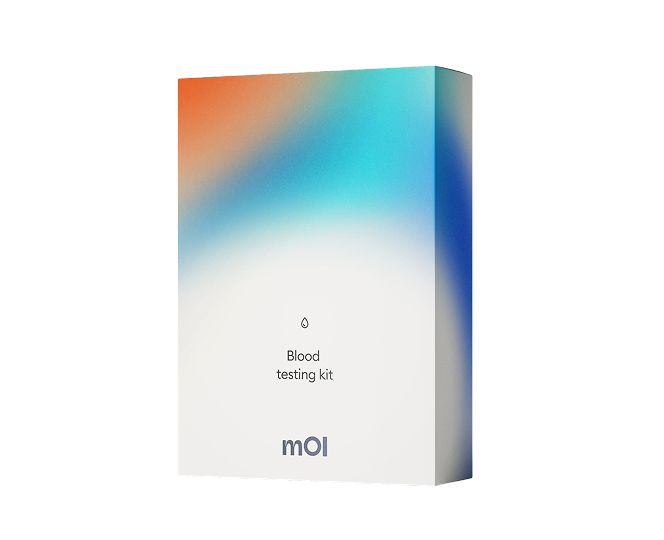
.png)
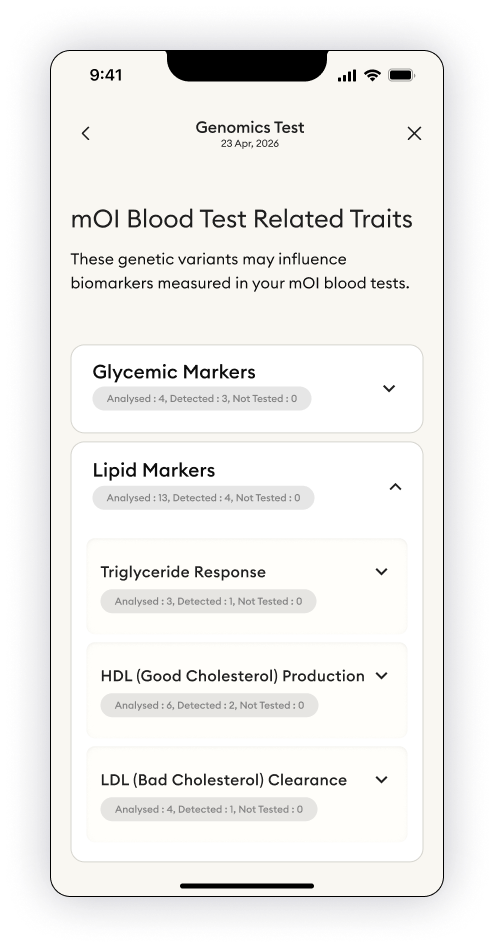
- PCR-free whole genome sequencing at 30× average coverage
- HLA typing for immune-related genetic context
- Pharmacogenomics insights into medication response
- Genetic results to consider alongside your health over time
- Sample: Venous blood
- Results: within 6 weeks of lab receipt
- Blood collection: Requires a venous blood draw at your home or work.
- Phlebotomy: needs to be purchased separately
- Sample: Venous blood
- Results: within 6 weeks of lab receipt
- Blood collection: Requires a venous blood draw at your home or work.
- Phlebotomy: needs to be purchased separately
What we measure & why it matters
Blood provides a source of human DNA for sequencing. Saliva can also contain DNA from microbes in the mouth. We use venous blood as the starting material for this test.
30× is the average number of times a position in the genome is read. Multiple reads help support confidence in variant calls. Coverage varies across the genome, and some regions are difficult to analyse.
PCR makes copies of DNA before sequencing. PCR-free preparation avoids this amplification step and can reduce amplification-related bias. It does not remove all sequencing limitations.
The current page describes HLA typing, pharmacogenomics, inherited variants associated with autoimmune risk and lifestyle-relevant variants. These provide genetic context; they do not establish whether you have an autoimmune condition. Publish the confirmed report scope and variant categories here once signed off.
Your inherited DNA sequence is largely stable throughout life. Genetic findings can provide a reference alongside later blood results and health information. Scientific understanding may change; future reinterpretation depends on the service offered.
Whole genome sequencing does not detect every genetic change. Average coverage is not a guarantee that every base is read 30 times. Genetic risk is one part of health, and medication decisions require clinical advice.
A structured path to Immune Intelligence
Choose your test
Select the test that’s right for you
Start with what you want to explore or understand
Receive your kit
Your test kit is delivered to your door
Everything you need, ready for your sample
Provide your sample
Follow the instructions in your kit or book an at home visit for blood collection.
Simple, guided steps depending on your test
Send your sample to the lab
Your sample is securely prepared and
sent for analysis
Handled with care to maintain quality
View your results and insights
See your results in the app, connected to your health over time
Helping you make sense of what’s changing
Choose your test
Select the test that’s right for you
Start with what you want to explore or understand
Receive your kit
Your test kit is delivered to your door
Everything you need, ready for your sample
Provide your sample
Follow the instructions in your kit or book an at home visit for blood collection.
Simple, guided steps depending on your test
Send your sample to the lab
Your sample is securely prepared and
sent for analysis
Handled with care to maintain quality
View your results and insights
See your results in the app, connected to your health over time
Helping you make sense of what’s changing
Frequently asked questions
Most health data changes. Your blood results shift with diet, stress levels, sleep. Your gut microbiome changes week to week. Even your immune markers fluctuate. The DNA you were born with doesn’t even if the way your genes express themselves can. It’s the one piece of biological data that stays constant while everything else shifts, which makes it the most valuable reference point you'll ever have. Which is why it's worth doing once, doing properly, and doing in full.
Standard genetic tests work from a pre-written list of known variants, checking specific points in your DNA that have already been studied and flagged. If something isn’t on the list, it gets missed.
Our Whole Genome + test reads your entire DNA code from start to finish. mOI then applies targeted analysis across the regions that matter most for immune health: HLA (the genetic system that controls how your immune system recognises threats), pharmacogenomics (how your genes affect the way your body responds to medications), autoimmunity risk, and the lifestyle factors that shape how your body functions day-to-day.
Your genome doesn’t just sit alongside your blood results. It helps explain them. Why your inflammatory markers run high. Why your iron levels sit persistently low. Why your immune system can respond differently depending on what’s happening in your life. The same result can mean something different depending on the genetic context it sits in. mOI reads both together, so your results are interpreted against the biology you were born with.
mOI sequences from blood, not saliva, at 30x coverage (meaning each part of your DNA is read thirty times over, to ensure accuracy), and PCR-free (avoiding a copying process that can introduce errors into the results).
It’s the foundation everything else sits on. Your blood results, such as those from our Immune Core test, tell you what’s happening right now. Your genome tells you why it might be happening to you specifically. And because your DNA doesn’t change, one sequencing is all you’ll ever need. If you’ve tested elsewhere before, the difference is in how it was done. Some consumer genetic tests use saliva, which introduces bacterial contamination and limits what can be accurately read. mOI sequences from blood, giving a cleaner, more complete picture from the start.
Once your kit arrives, you’ll book a visit with a trained phlebotomist at your home or a location convenient to you. Appointments are available between 8am and 2pm, Monday to Wednesday. Your sample is collected using professional methods, centrifuged on-site to preserve quality, and prepared for secure delivery to the lab. Everything is handled for you from start to finish.
Immune function
Your genes shape how your immune system behaves at a fundamental level. Not just whether it’s active or not, but how it detects threats, how it manages inflammation, and how it responds to what your body encounters over time. This is the biological baseline everything else sits against.
Autoimmune risk
Some genetic variants make certain autoimmune conditions more likely. Not a certainty, but a clearer picture of where your personal biology sits. These variants are associated with conditions including lupus, rheumatoid arthritis, and ankylosing spondylitis. Knowing they’re there before symptoms appear is the point.
HLA typing
Your HLA genes are how your immune system tells self from threat. They help your body tell the difference between its own cells and foreign ones, and they have a strong influence on both autoimmune risk and how you respond to certain medications. mOI sequences your HLA type directly rather than estimating it. That distinction matters for accuracy.
Pharmacogenomics
The same medication can work very differently from one person to the next. Pharmacogenomics looks at variants that may influence how your body processes drugs commonly used in autoimmune conditions, including methotrexate, azathioprine, and NSAIDs. Not a prescribing decision. A clearer starting point for any conversation with your clinical team.
Lifestyle factors
The same diet, exercise plan, or sleep routine can produce very different results from one person to the next. Lifestyle genetics looks at variants that may influence how your body processes nutrients, responds to physical activity, regulates weight, and manages sleep and energy. Not a prescription for how to live. A clearer starting point for understanding why your body responds the way it does.
- Drink at least 500ml of water in the 2 hours beforehand. Good hydration makes the draw easier and improves sample quality.
- Fast for at least 8 hours before your appointment. Overnight fasting works well. Some markers, particularly lipids and glucose, are significantly more accurate when measured in a fasted state.
- Continue taking any prescribed medication as normal unless your clinician has advised otherwise. If you take blood thinners or have a bleeding or clotting condition, please let your phlebotomist know before the draw
- Your phlebotomist will apply a cotton pad to the puncture site. Keeping your arm straight for a few minutes helps.
- A plaster may be applied to cover the area. If you have a plaster allergy, let your phlebotomist know beforehand.
- Try to keep the dressing on for at least an hour to reduce the chance of bruising and keep the area clean.
- If you’ve felt faint after a blood draw before, mention it to your phlebotomist so they can keep an eye on you.
- Some light bruising is normal and should fade within a few days.
- If you feel unwell after your test, contact your GP or local NHS service for advice.
For more on what to expect, you can visit the NHS website: https://www.nhs.uk/tests-and-treatments/blood-tests/.
We sequence your full genome at 30x clinical benchmark coverage. That said, not every variant in your genome can be meaningfully interpreted yet. We report on areas where the science is strong enough to say something useful. As research moves forward, new findings may become relevant to results you’ve already received.
This test doesn’t provide a diagnosis. Your results are intended to support your understanding of your own biology and may help inform conversations with your clinical team. They shouldn’t be used as the sole basis for any medical decision.
mOI is a registered as a Class I Software as a Medical Device. This test isn’t a substitute for clinical assessment or advice from a qualified healthcare professional.
Your genome contains the biological instructions your body has been working from since birth. This test surfaces the variants that influence how your immune system functions, which conditions you may be more likely to develop, and how your body is likely to process certain medications. HLA typing tells you how your immune system identifies its own cells, and where the science suggests it may be more prone to confusion between self and foreign. Pharmacogenomics tells you how your body may respond to medications commonly used in immune and inflammatory conditions. Lifestyle genetics tells you how your DNA shapes the way you process nutrients, respond to exercise, regulate weight, and manage sleep and energy. Together, they give you a biological foundation that makes every other result you ever run more meaningful.
Our Whole Genome + test is for anyone who wants to understand their biology at a deeper level. It’s particularly relevant if you’re managing an autoimmune or inflammatory condition, if your results have never quite added up, or if you want to understand how your genetics might be shaping your response to medications. You only need to do it once.
We aim to get your results to you as quickly as possible once your sample reaches the lab, though turnaround times vary by test and occasionally take a little longer for reasons outside our control. Turnaround times are estimates, not guarantees, and are subject to our Terms and Conditions of Sale. Most results appear directly in the mOI app, linked to your health record. They sit alongside your tracking data and insights rather than arriving as a standalone report. For some tests, including certain gut health results, you may receive a PDF report instead of in-app results. Where this applies, it will be made clear at the time. If your membership has lapsed or been cancelled when results become available, we’ll deliver them to the email address held in your account instead.
Your results are a reference point, not a verdict. They’re designed to sit alongside your other mOI data and give you and your clinical team a fuller picture. These markers are most useful when read alongside your Immune Core results and any autoimmunity panels you’ve run. If anything raises questions, bring them to your next clinical appointment. mOI results are structured to be shared with clinicians.
Yes. Testing is only available with a paid mOI membership, and tests are priced separately. Membership gives you access to the full platform, including your results, longitudinal tracking, and the insights that connect your data over time. If you’re not a member yet, you can create an account to get started.